
our fibre space blog

Ask the “Expert”: Weaving in Ends, or, Where Is My Yarn At?

You might have heard the phrase “reading your knitting.” Perhaps you’ve even heard me use it. What does it mean and why is it important?

I prefer to think of reading my knitting as answering the question, “Where is my yarn at?” The idea is that if you understand the path your yarn takes to make a knit fabric, you can use that knowledge to fix mistakes, graft, weave in ends, and better understand charts. I think weaving in ends is a great way to see how yarn makes Stockinette stitch, because when you weave in an end you’re following the yarn’s path. Here’s the reverse side of some Stockinette stitch (because you’ll be weaving ends on the back in most cases). I’ve make some markings along a row that indicate where your yarn is at.
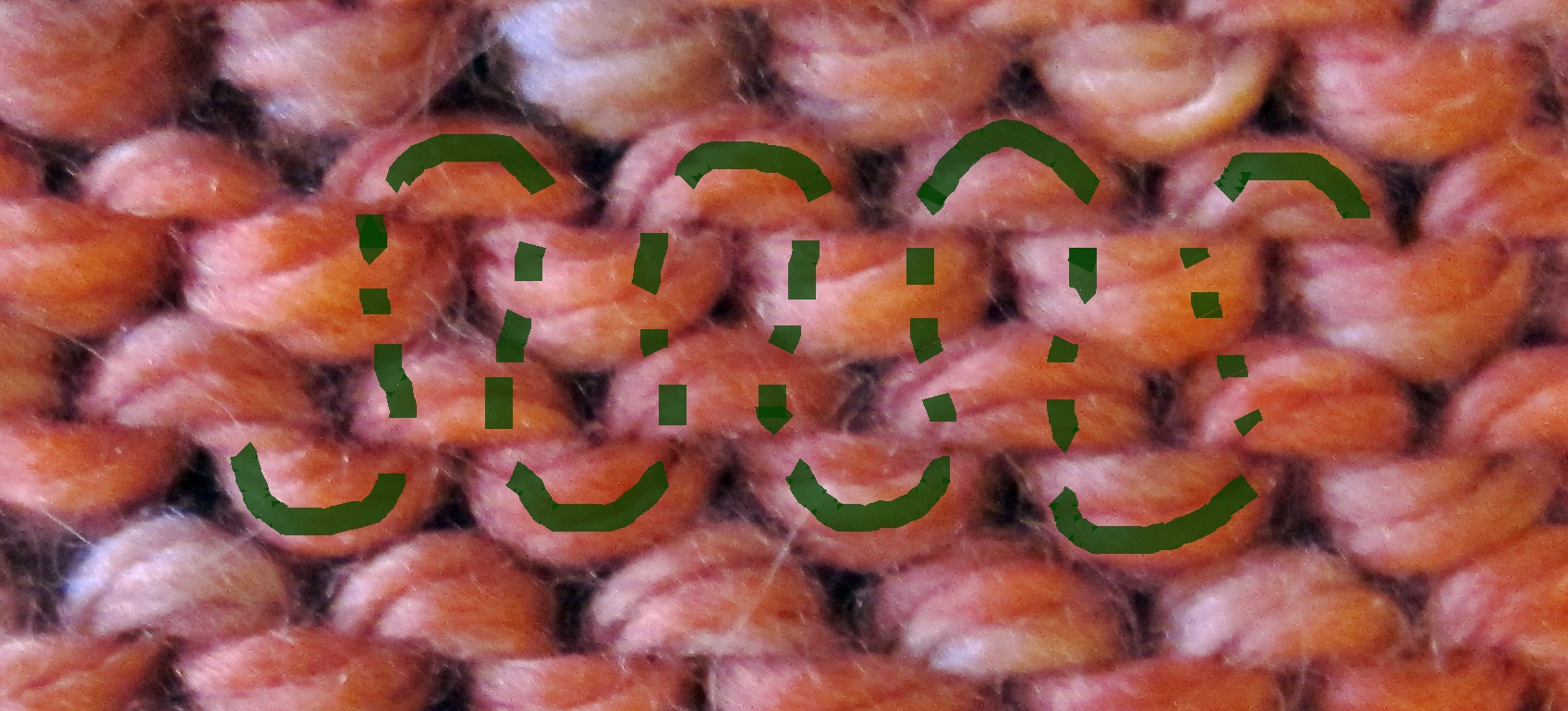
this is where your yarn is at

So THAT’S where my yarn is at!

The solid lines show the yarn you see for the row; the dotted lines show where the yarn goes behind the strands from the row above and below it. This is the path you want to trace when you weave in ends.
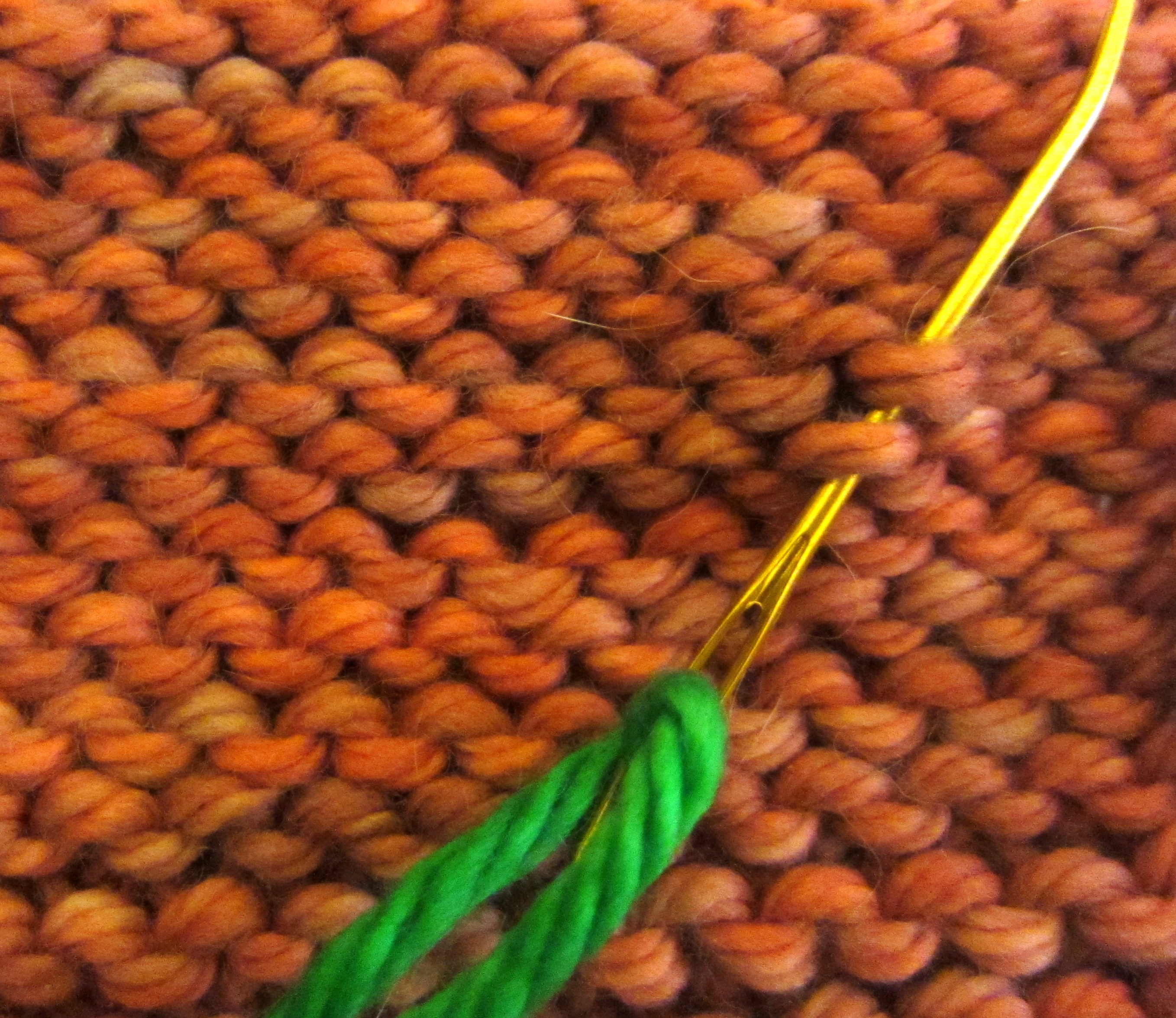
Pick a place near your end to start weaving.

Pick a place to start weaving. If you’re weaving ends into Stockinette or garter, this can be anywhere. If you’re weaving ends into lace, pick a place near your end that has a group of dense stitches with minimal yarn overs.

Follow the curve of the stitches as drawn above with your needle. You’ll go around the top curve of one stitch, then back through the previous middle stitch.
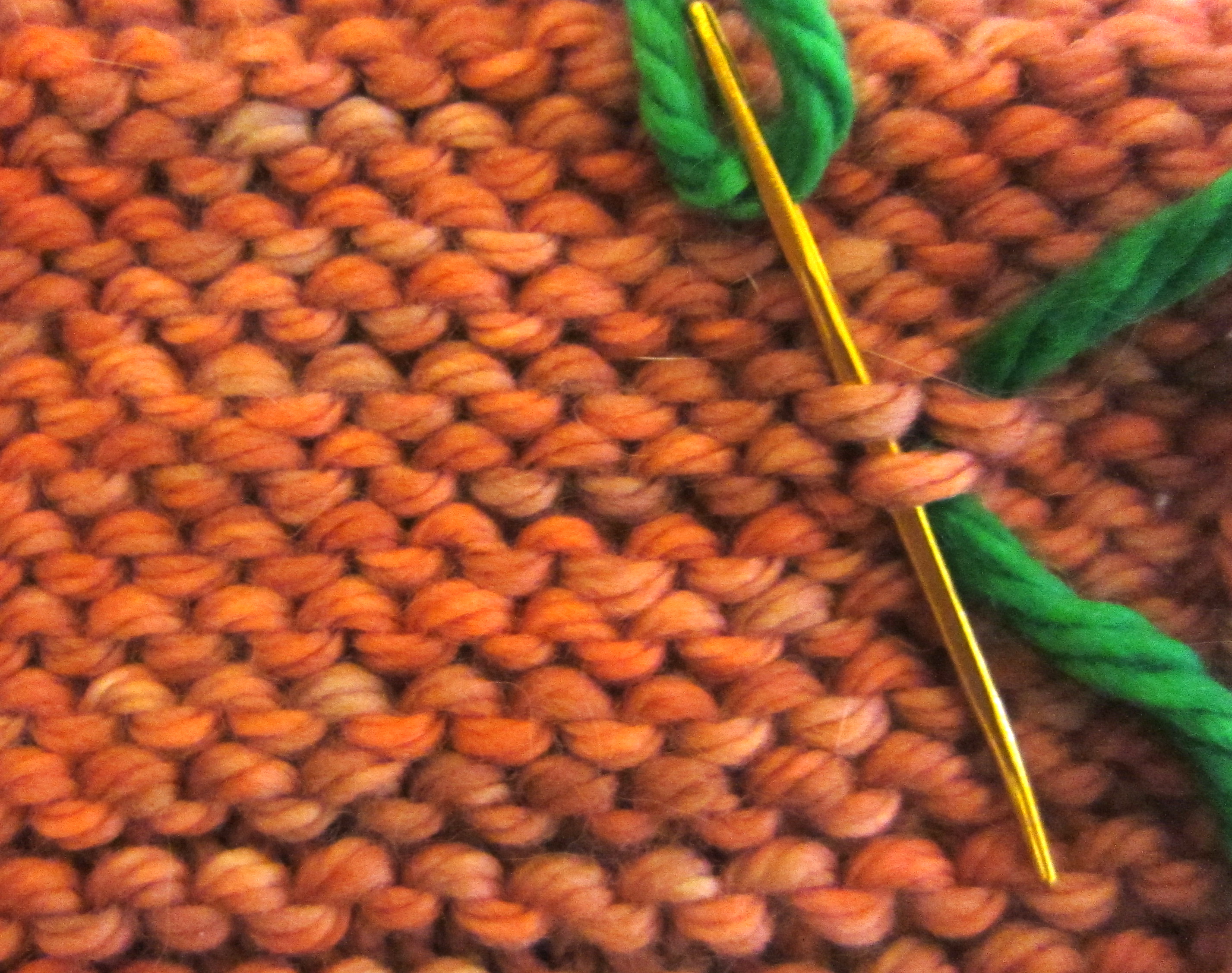
Follow your yarn around the curve.

Follow your yarn around the curve.

Then you’ll go around the bottom curve of the next stitch, and then back through the previous middle stitch.
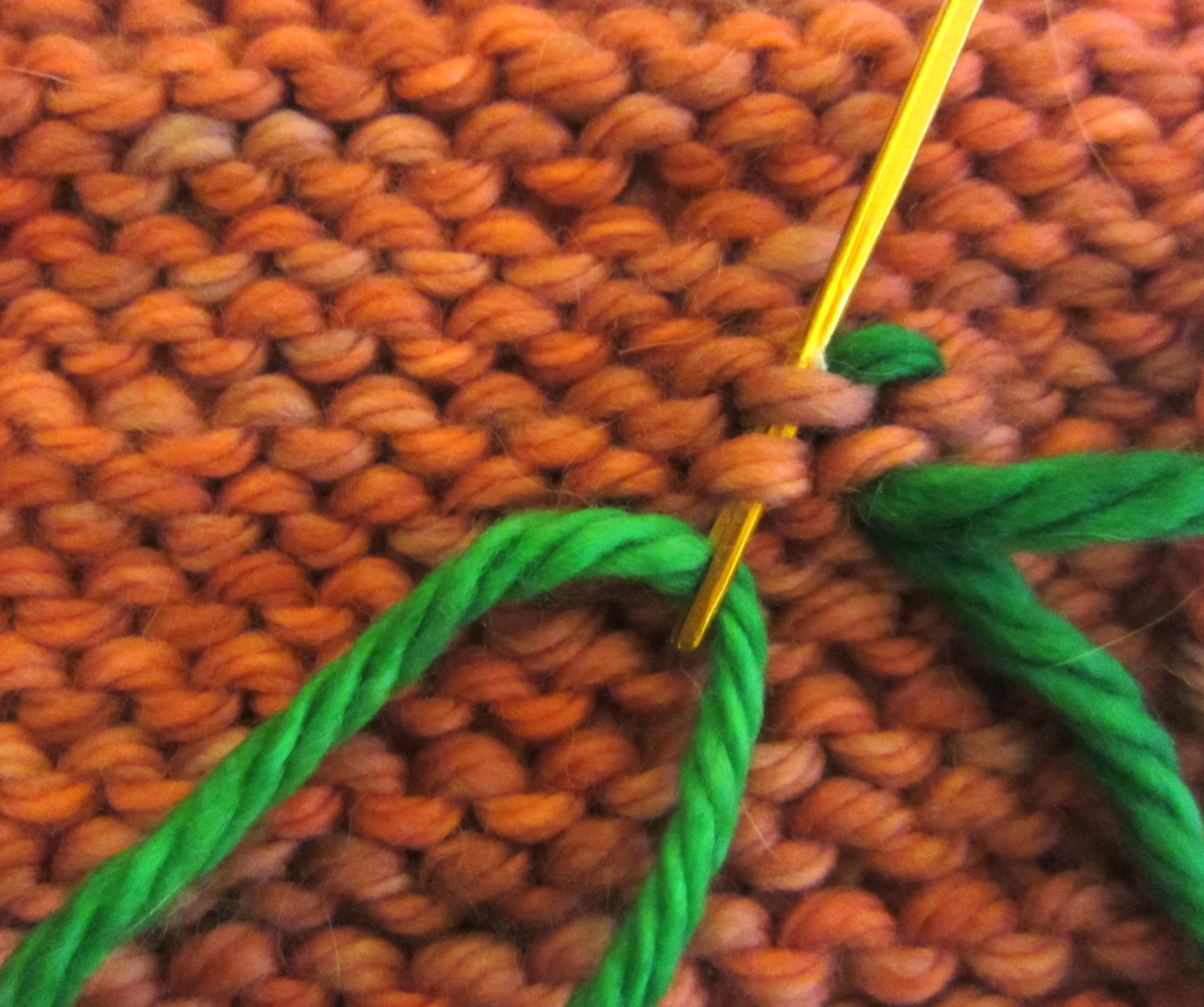
First stitch complete!

First stitch complete!

Repeat this, pulling the yarn tight but not too tight; you don’t want the knitting to pucker.
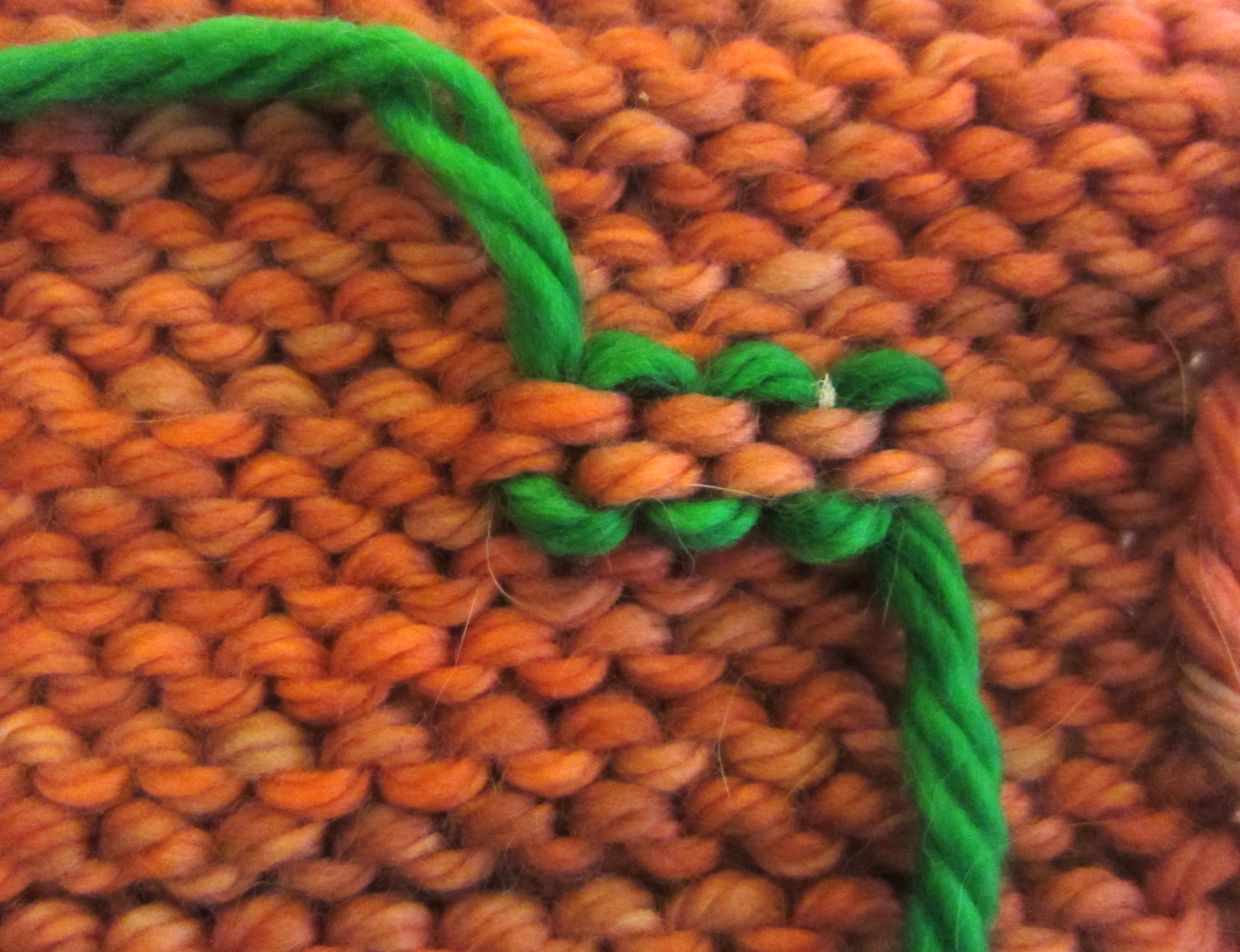
Progress!

Progress!

When you’ve woven in the ends for about 2 inches (I recommend more if your yarn is slippery, like silk or a silk blend), cut the ends short, but not too short. If you don’t leave a little tail, the ends will pop right through to the front of your work.
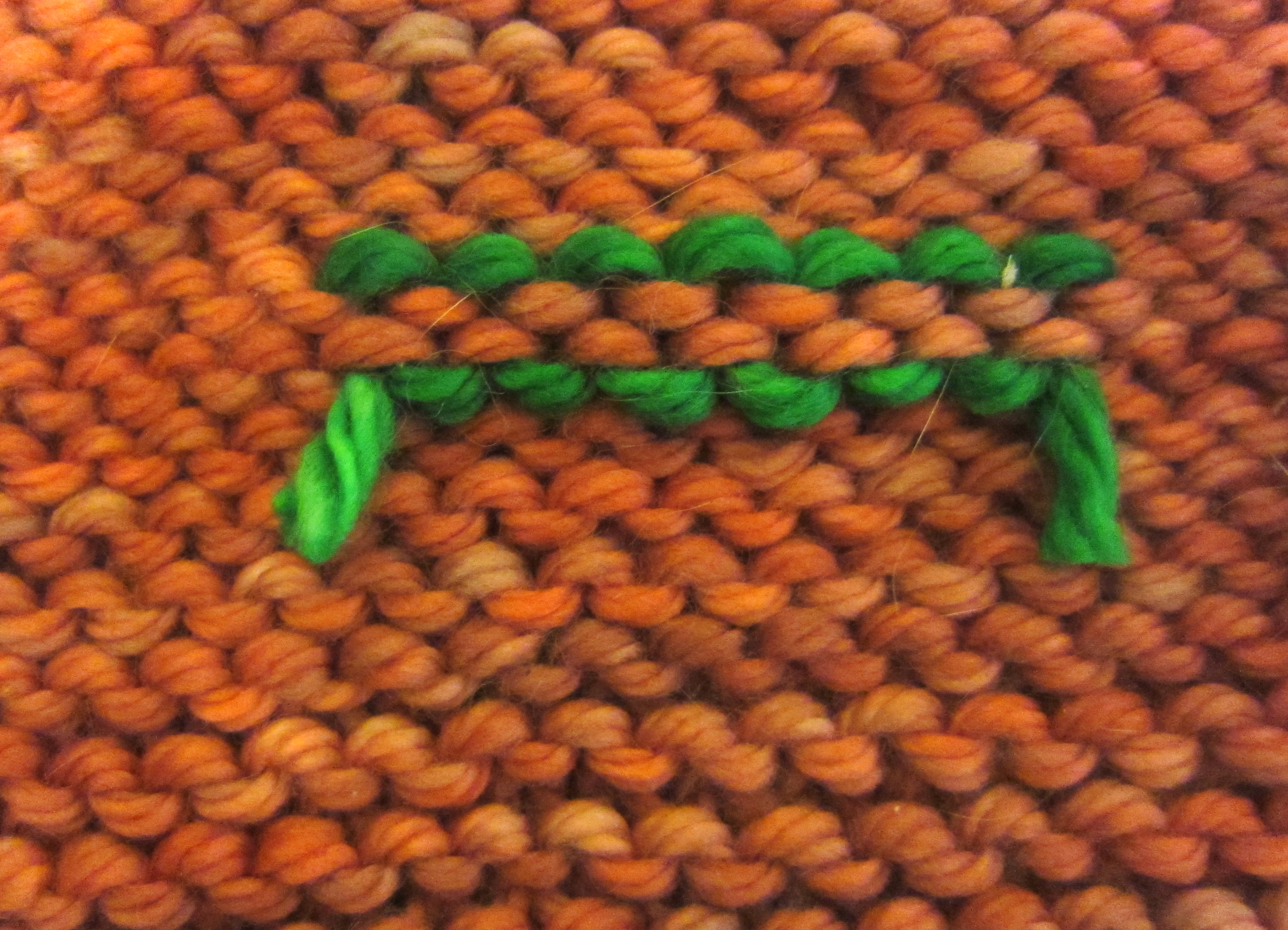
Success!

Success!

And here’s the front: Your ends are secure, and you can barely see the ends you’ve woven in, even with green yarn woven into pink knitting (which you likely won’t be doing).
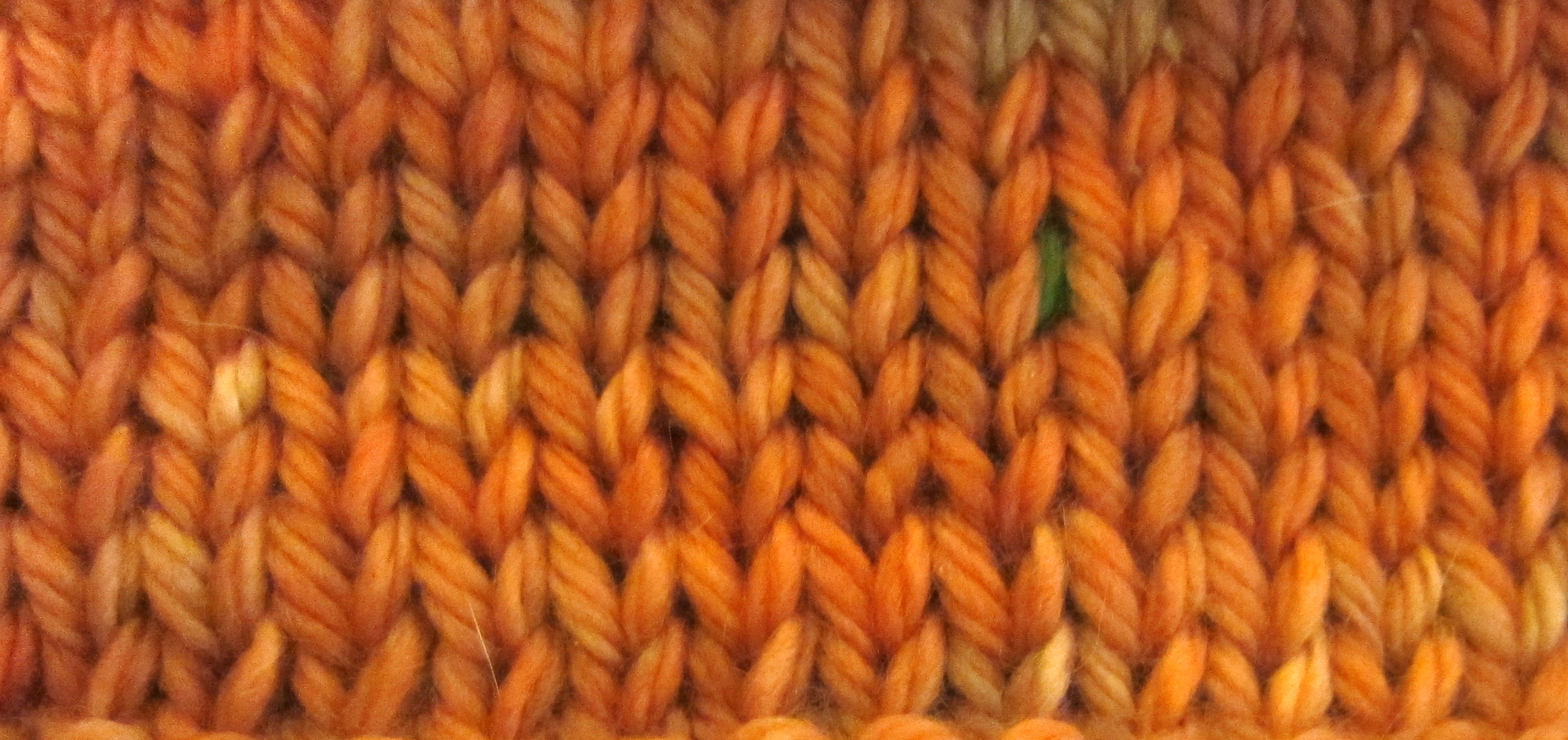
obverse

Magic!

Now, secure those ends and embrace finishing techniques! YOU KNOW WHERE YOUR YARN IS AT!

Print Friendly

Filed: Tips

Tagged: ,

8 Comments

  • 3/11/13 16:29 Liz:

    This is probably a silly question, but weaving in yarn is a huge bugaboo for me. How, exactly, do I “secure those ends”? Thanks!

    Reply

    • 3/11/13 16:43 weaverknits:

      It’s not silly at all! You secure the ends by weaving them in as I’ve described, then pulling them tight and cutting them not to close. “Securing the ends” is a restatement of “weaving in the ends.”

      Try the method I’ve described here. You can do it!

      Reply

  • 3/11/13 19:04 ac:

    Ok– I see that but what is be best way to handle ends in something that is not garter stitch or stockinette?

    Reply

    • 3/12/13 6:50 weaverknits:

      I believe that will be my next post. Something like “Intermediate End Weaving.” Stay tuned!

      Reply

  • 3/12/13 15:36 Cath:

    Thanks for this! I’m terrible at finishing and I’ve never known why- I just threaded the yarn along in a straight line and wondered by things would never stay put. This answers that question.

    Is there a finishing class at fibre space in the near future?

    Reply

    • 3/12/13 20:53 weaverknits:

      We’re going to set one up soon! Stay tuned!

      Reply

  • 3/13/13 12:31 Mackenzie Morgan:

    My problem is lace. If I’ve got a big open lace going on, how does it *not* become noticeable when there’s suddenly twice the yarn in one spot? And there’s really no back to a shawl or scarf :-/

    Reply

  • 3/13/13 12:33 weaverknits:

    I’ll address this in “Intermediate End Weaving,” a post I’ll do in the next week or two. Stay tuned!

    Reply